
Why Serious Construction Accidents in Massachusetts Require Immediate Investigation
A construction accident can leave you dealing with much more than the injury itself. A fall from a ladder, unsafe scaffolding, collapsing trench, falling object, or heavy-equipment incident can quickly lead to medical treatment, missed work, questions about workers’ compensation, and uncertainty about who may actually be legally responsible.
Construction accident cases often involve more than one company working on the same Boston job site. General contractors, subcontractors, property owners, equipment companies, and outside vendors may all play a role in creating or failing to correct unsafe conditions. Determining who created the hazard — and whether a third-party personal injury claim may exist in addition to workers’ compensation benefits — can require early investigation and evidence preservation.
The construction accident lawyers at Gavagan Law represent injured workers and families throughout Boston, Dorchester, Cambridge, Somerville, Quincy, and Massachusetts in serious construction-site injury cases. Gavagan Law helps clients investigate liability issues, preserve critical evidence, communicate with insurance companies, and pursue compensation related to unsafe construction-site conditions, OSHA-related safety violations, falls, falling objects, heavy equipment incidents, and other dangerous work-site hazards. When necessary, Gavagan Law is prepared to aggressively litigate construction accident cases to pursue full financial recovery for our injured clients.
Quick Answer:
- Workers’ compensation may provide medical and wage benefits after a Massachusetts construction accident, but it is not always the only legal claim available.
- If a general contractor, subcontractor, property owner, equipment company, or another third party contributed to the unsafe condition or accident, you may also have a separate third-party personal injury claim.
- A third-party construction accident claim may allow recovery for damages workers’ compensation does not fully cover, including pain and suffering and other financial losses.
Boston Construction Accident Lawyer for Serious Work-Site Injuries
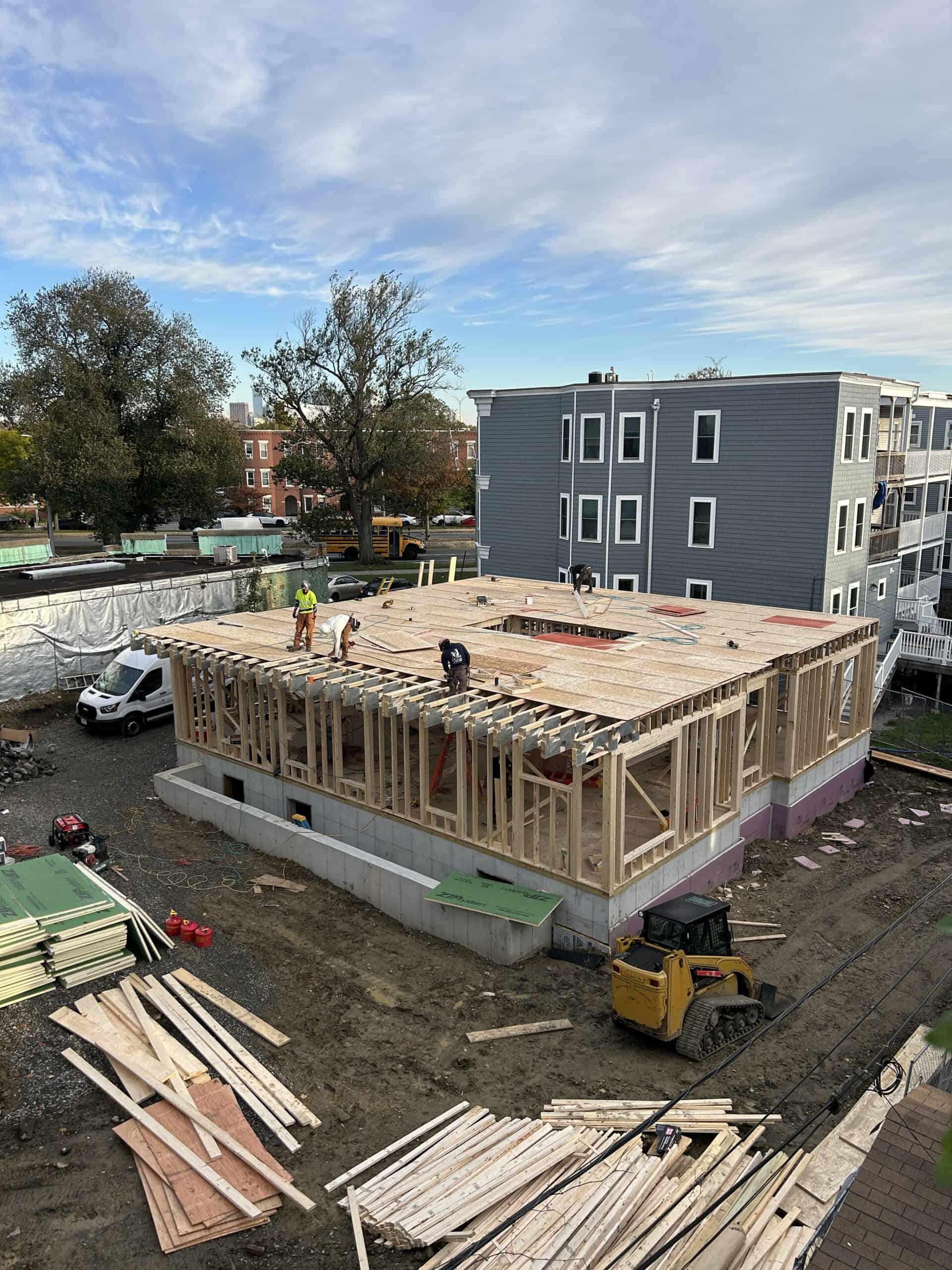
Construction sites in Boston often involve many companies working in the same space. A single project may include a property owner, developer, general contractor, subcontractors, delivery companies, scaffold companies, equipment rental vendors, and site safety personnel.
When an injury happens, identifying who controlled the work area and who created the hazard can be just as important as proving how the accident occurred. Gavagan Law helps injured workers and families sort through those questions, preserve important evidence, and understand the legal path that fits the facts.
Why Identifying Who Was Responsible After a Construction Accident May Require Immediate Investigation
Construction accident cases can involve both workplace injury rules and ordinary negligence law. That overlap makes early investigation important when a workers’ compensation claim and a separate personal injury claim may need to be evaluated at the same time.
Workers’ Compensation and Third-Party Claims
Workers’ compensation generally provides certain benefits for employees injured in the course of employment. Those benefits may include medical treatment and partial wage replacement, depending on the circumstances.
A third-party claim is different. It is a personal injury claim against someone other than the injured worker’s employer or co-worker. Under Massachusetts law, when a work injury is caused by a legally responsible third party, the injured employee may be able to receive workers’ compensation benefits while also pursuing a claim against that outside party.
That could mean a claim against a general contractor that failed to coordinate site safety, a subcontractor that created an unsafe condition, a property owner that failed to address a known danger, a scaffold company that assembled unsafe scaffolding, an equipment manufacturer or rental company connected to defective machinery, or a delivery driver who struck a worker.
For many injured workers, this is where the case moves beyond a standard workers’ compensation question. The facts may point toward a third-party work injury claim or, in the most severe cases, catastrophic injury or wrongful death issues.
Every case depends on the facts. A consultation can help determine whether a third-party claim may exist.
Why Identifying Every Contractor Matters
After a construction accident, the first explanation is not always the full explanation. A ladder fall may involve the ladder, the work assignment, the floor condition, missing fall protection, or pressure to work in an unsafe way. A falling-object injury may involve site storage, overhead work, missing toe boards, poor communication, or a subcontractor working above other trades.
Construction projects move quickly. Equipment gets moved, debris is cleaned, contractors leave the site, and paperwork can become harder to obtain. That is why early investigation can matter, especially on busy Boston sites where several trades, construction companies, and equipment vendors may be working around each other.
Common Construction Accidents in Boston
Many job-site injuries trace back to hazards that could have been reduced with better planning, supervision, proper training, inspection, or communication.
Ladder Falls and Scaffold Injuries
Falls are one of the most serious risks on construction sites. A ladder or scaffold injury may involve unstable ladders, missing guardrails, improperly assembled scaffolding, unsafe planking, missing fall protection, poor ladder access, slippery work surfaces, or workers being asked to carry materials while climbing.
These cases usually require more than a quick look at the accident scene. Photographs, inspection records, safety protocols, and the roles of the contractors on site can all matter.
When the accident involves a fall from a height, the investigation may need to look at scaffold safety, ladder use, fall protection, premises hazards, and the long-term effect of the injury on the worker’s ability to earn a living.
Falling Objects and Struck-By Accidents
Workers and pedestrians can be seriously injured when tools, materials, debris, equipment, or rigging fall from above. These cases may involve tools dropped from scaffolds or lifts, materials stored too close to an edge, missing overhead protection, crane or hoist problems, heavy machinery, delivery vehicles, or work zones near sidewalks and building entrances.
In Boston, construction sites are often pressed up against sidewalks, traffic, MBTA stations, office buildings, and residential properties. That local reality makes job-site planning and public protection especially important.
If a pedestrian, driver, tenant, or visitor is hurt near a work zone, the investigation may also involve premises liability, truck or delivery-vehicle issues, or unsafe public-access areas around the site.
OSHA Violations and Unsafe Site Practices
The Occupational Safety and Health Administration, often called OSHA, identifies major construction hazards such as falls, struck-by accidents, caught-in or between accidents, and electrocution. An OSHA violation does not automatically decide every injury claim, but it can be important evidence when safety regulations, a training requirement, or a site practice were ignored.
In a construction accident case, the review may include fall protection, scaffold safety, ladder safety, electrical hazards, trench protection, personal protective equipment, training, supervision, inspections, hazard communication, and whether the job site followed the safety protocols that applied to the work being done.
Contractor and Subcontractor Negligence
Many construction accident cases turn on the conduct of another company on the site. A subcontractor might leave debris in a walkway, remove a guardrail, overload a scaffold, operate equipment carelessly, or fail to coordinate overhead work. A general contractor might fail to enforce site safety rules or coordinate trades working in the same area.
The question is not simply whether the injury happened at work. The question is whether a legally responsible third party caused or contributed to the accident.
Who May Be Liable for a Construction Site Injury?
Depending on the facts, more than one company or person may need to be investigated. Potential responsible parties include:
- General contractors.
- Subcontractors.
- Property owners.
- Construction managers.
- Scaffold companies.
- Equipment rental or maintenance companies.
- Trucking and delivery companies.
- Architects, engineers, or design professionals in limited circumstances.
- Equipment manufacturers or distributors of defective construction equipment.
Liability depends on control, conduct, notice, contract responsibilities, safety obligations, and causation. Those details are why it is usually too early to decide all liable parties from the accident report alone.
Evidence That Can Matter in a Construction Accident Case
Useful evidence can include:
- Photos and video of the accident scene.
- Names and contact information for witnesses.
- Incident reports.
- Medical records.
- Wage and employment records.
- Site safety plans.
- Daily logs.
- Contractor and subcontractor agreements.
- Scaffold inspection records.
- Equipment maintenance records.
- Construction equipment records.
- OSHA investigation materials, if available.
- Training records.
- Surveillance video.
- Text messages, emails, or job-site communications.
Construction sites change quickly after an accident. Equipment may be moved, debris cleared, contractors reassigned, and surveillance footage overwritten. Early investigation can help preserve important evidence before it disappears.

